Showing posts with label kabuki. Show all posts

Thursday, 23 March 2023

IN-VOCATION たまおこし review | Yumi Umiumare | Dancehouse

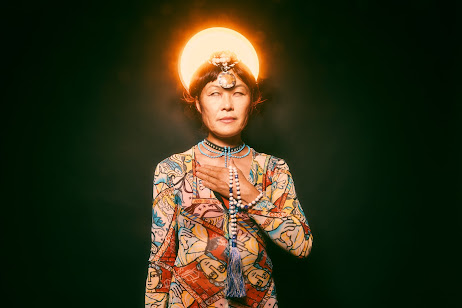
After an utterly incredible show with Buried TeaBowl - Okuni last year, performance artist Yumi Umiumare returns with IN-VOCATION たまおこし, a potent pairing to the 2022 show. With its predecessor exploring time, ritual, the past and the present through her connection to Okuni, a 17th century Japanese dancer credited as being the founder of kabuki theatre, this new show digs deeper into Okuni's life, with a focus on releasing the "Okuni spirit" inside all of us.

Joining Umiumare are two Japanese artists, Kayo Tamura, a shaman in theatre and Kyoko Amara, a professional clairvoyant and singer. This trio perform music, dance, rituals and storytelling as they share and discover the many characters of Okuni. With the Japanese title of the show translating to provoking / awakening the soul, it's fitting that a shrine to the womb sits in the middle of the stage as the three build and release the female power and energy of Okuni. They go big and bold in their acts but maintain an intimacy and authenticity with their audience that allows us to open our minds and hearts to what we are witnessing.


Monday, 9 May 2022

Buried TeaBowl - Okuni review

I've seen Yumi Umiumare perform numerous times over the years but always as part of the ensemble in someone else's show. Buried TeaBowl - Okuni is the first time I have attended one of her full solo works and I am very disappointed I waited so long to have had this incredible experience. Incorporating dance, spoken word, song and a tea ceremony, this performance installation is an intimate and stirring passage through time, ritual, the past and the present.

These four themes are clear in Umiumare's inspiration for her show: a 17th century Japanese dancer, Okuni, who is credited as being the founder of kabuki theatre. Literally translated to "the art of song and dance", Okuni began performing kabuki around Kyoto in the early 1600s and formed an all-female troupe that portrayed both male and female characters. Kabuki eventually became equated with prostitution and immorality and in 1629 this outrage led to a Government ban on women performing kabuki that was not lifted until the late 19th century.